The Best Time to Visit the Amalfi Coast for Perfect Weather (2026 Guide)
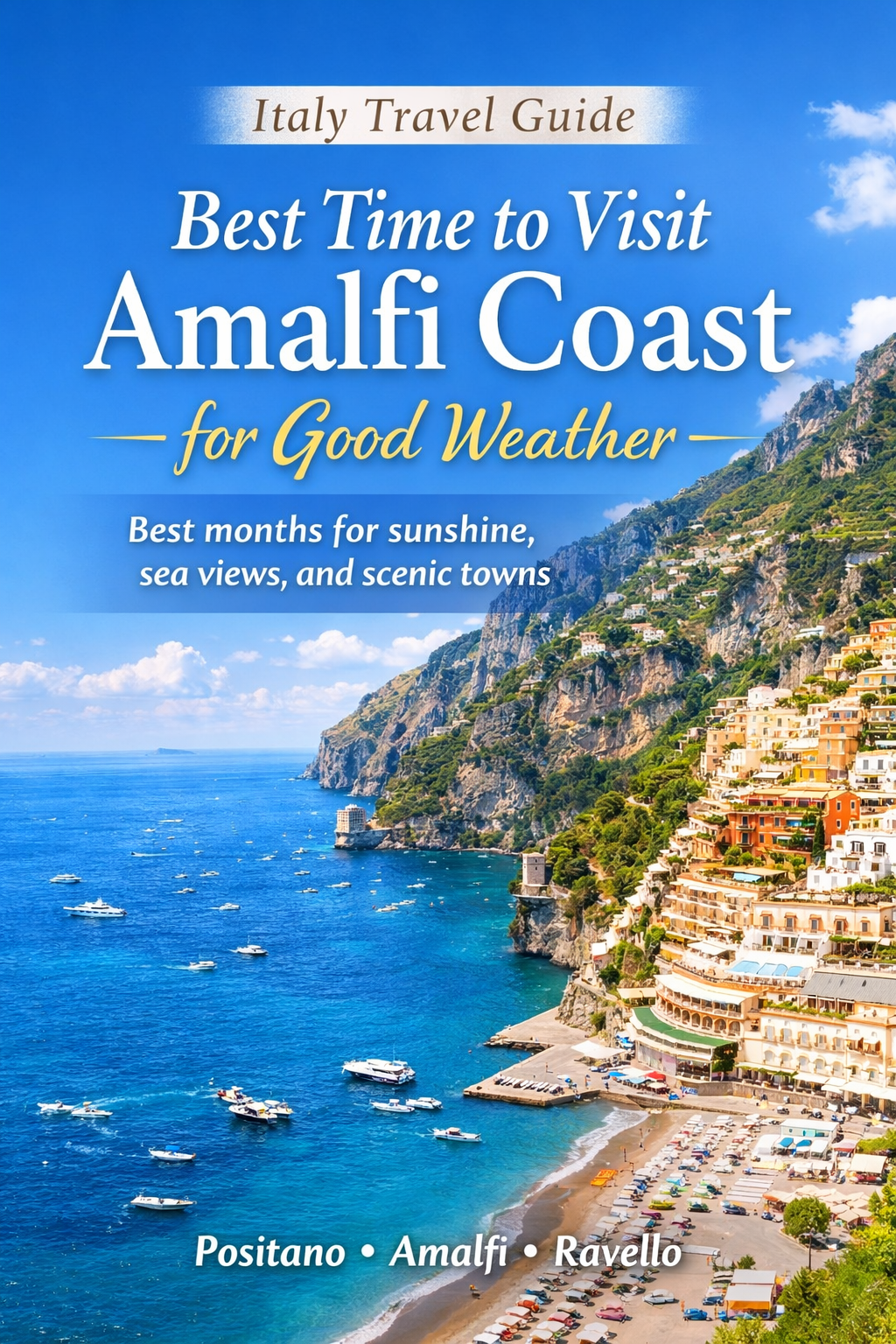
If you are planning a trip to Italy’s most iconic coastline, timing is everything. While the region is beautiful year-round, the best time to visit the Amalfi Coast for good weather is during the shoulder seasons: late spring (May and June) and early autumn (September and October).
During these months, you’ll experience the perfect trifecta: mild Mediterranean temperatures, abundant sunshine, and manageable crowds.
When is the best time to visit the Amalfi Coast for good weather?
- Best Overall: May, June, and September.
- Warmest Weather: July and August ($28°C – 31°C$).
- Best for Hiking: April, May, and October.
- Most Budget-Friendly: November to March.
| Season | Months | Average Temp | Best For |
| Spring | April – June | 18°C – 25°C | Hiking, Florals, Sightseeing |
| Summer | July – August | 28°C – 31°C | Beach Clubs, Nightlife, Swimming |
| Autumn | Sept – October | 20°C – 27°C | Warm Sea, Photography, Wine |
| Winter | Nov – March | 10°C – 15°C | Peace, Low Budgets, Local Life |
Why May, June, and September are the “Sweet Spot”
Travel experts and locals agree that the “shoulder season” offers the most elite experience. Here is why these months dominate the rankings:
1. Ideal Temperatures for Exploration
In May and October, the weather is crisp enough for the “Path of the Gods” hike but warm enough for an alfresco lunch in Ravello. Unlike the sweltering heat of August, these months allow you to explore Positano’s steep stairs without exhaustion.
2. Vibrant Landscapes & Photography
- Late Spring: The cliffs are draped in purple wisteria and bougainvillea. It is the peak season for content creators looking for that lush, “Dolce Vita” aesthetic.
- Early Autumn: The light turns golden and soft, perfect for sunset boat tours and professional photography.
3. Comfortable Humidity Levels
While July and August often see high humidity, the breeze in June and September keeps the coastal air fresh, making ferry rides and scenic drives much more enjoyable.
Is Summer Too Hot to Visit?
July and August are the hottest months on the Amalfi Coast. While the Mediterranean sun is glorious, there are trade-offs:
- The Heat: Temperatures frequently climb above 30°C.
- The Crowds: Expect packed ferries, fully booked beach clubs, and heavy traffic on the Sita buses.
- The Price: Accommodation rates reach their peak.
Tip: If you must visit in summer, book your boat tours for the early morning to avoid the midday sun and the largest tourist swells.
Visiting in the “Off-Season”: What to Expect
If you prioritize tranquility over swimming, March and April offer a refreshing, quiet atmosphere. However, be mindful that the Amalfi Coast “wakes up” in Easter; visiting before then may mean some boutique hotels and seaside restaurants are still closed for the season.
From November to February, the coast is prone to rain and cooler winds. While not the best time for “good weather” seekers, it is the ultimate time for travelers seeking solitude and deep discounts.
Final Verdict: When Should You Book?
For the most reliable sunshine and comfortable temperatures, book your trip between May 15th and June 20th, or the entire month of September. You will get the full Italian summer experience without the peak-season burnout.
7-Day Amalfi Coast Itinerary: The “Sweet Spot” Experience
Day 1: Arrival in Sorrento & Sunset Limoncello
- Morning: Arrive in Sorrento (the most strategic base for transport).
- Afternoon: Wander the Centro Storico. In the shoulder season, the air is fragrant with lemon blossoms.
- Evening: Sunset drinks at Marina Grande. The temperatures in May/September are perfect for dining right by the water without the summer humidity.
Day 2: The Glamour of Capri & Anacapri
- Morning: Take the fast ferry to Capri.
- Pro Tip: Since it’s not peak August, head straight to Anacapri and take the chairlift to Monte Solaro for 360° views.
- Afternoon: Visit the Gardens of Augustus. In the spring, the flowers are in full bloom; in the fall, the crowds have thinned enough to actually see the Faraglioni rocks.
Day 3: Positano & The Vertical City
- Morning: Ferry to Positano (the view from the water is essential).
- Afternoon: Skip the main beach (Spiaggia Grande) and walk 10 minutes to Forillo Beach. It’s a “hidden” local favorite that feels private during the shoulder months.
- Evening: Browse the linen boutiques. May and September offer the best shopping conditions before the shelves are cleared by summer tourists.
Day 4: Hiking the “Path of the Gods” (Sentiero degli Dei)
- Morning: Take the bus to Bomerano.
- The Hike: This 7km trek is the crown jewel of the coast.SEO Weather Note: This hike is often dangerous or exhausting in 30°C+ summer heat. In the shoulder season, the $15-20°C$ breeze makes this a world-class experience.
- Afternoon: Descend into Nocelle for a fresh lemon granita and walk down to Praiano.
Day 5: Hidden Gems: Praiano & Furore
- Morning: Explore Praiano, the quieter neighbor to Positano. Visit the church of San Gennaro with its stunning majolica tiled floor.
- Afternoon: Visit the Fiordo di Furore. This tiny “fjord” is one of the most photographed spots in Italy. In the off-peak months, you can actually find a spot on the tiny pebble beach.
Day 6: Amalfi Town & The Heights of Ravello
- Morning: Visit the Duomo di Amalfi. Explore the Valle delle Ferriere for a light hike through ancient paper mill ruins.
- Afternoon: Take the bus/taxi up to Ravello.
- Highlight: Visit Villa Cimbrone and the “Infinity Terrace.” The gardens are at their peak aesthetic in late May.
- Evening: Enjoy a quiet dinner in Ravello’s main piazza.
Day 7: Pompeii or Mount Vesuvius
- Full Day: On your way back toward Naples, stop at Pompeii.
- Why now? Pompeii has very little shade. Walking the stone streets in July is punishing. Doing it in the mild October sun is educational and pleasant.
- Evening: Final Neapolitan pizza in Naples before your flight.
Transport Tip for 2026
In 2026, the Salerno Costa d’Amalfi Airport (QSR) is more active than ever. Check flights directly there to save 90 minutes of transit time from Naples (NAP) if you are staying on the eastern side of the coast (Amalfi/Vietri sul Mare).
The “Golden Rule” for 2026
Don’t over-schedule. The Amalfi Coast is best experienced in the “in-between” moments: a second espresso in a quiet Praiano piazza, an extra hour watching the sunset from a Ravello garden, or a spontaneous conversation with a local limoncello producer.
By choosing the months of May, June, or September, you are buying yourself the most precious travel commodity of all: Space. Space to breathe, space to photograph, and space to actually fall in love with Italy rather than just checking it off a list.